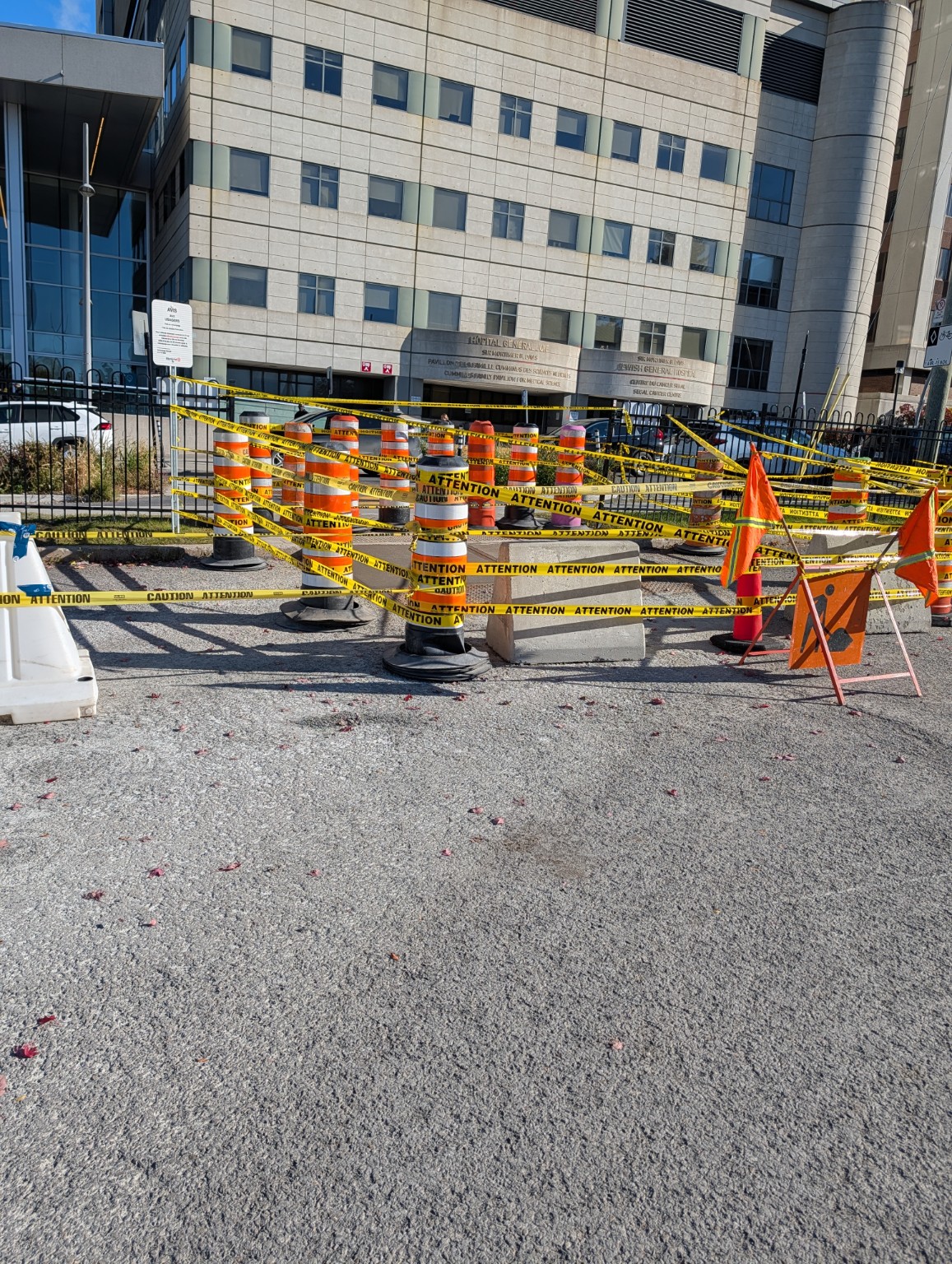
MONTRÉAL — According to the city’s Department of Urban Wildlife, the island’s population of orange traffic cones (Conus Orangeus Montrealis) has officially outnumbered its permanent human residents by four to one. Usually, in early November, these noble plastic creatures gather in flocks along Saint-Laurent Boulevard and slowly migrate south — toward warm underground parking garages or warehouses in Laval. This year, however, the natural cycle has gone off course.
Meteorologists and municipal ornithologists are sounding the alarm: record temperature anomalies caused by a super El Niño have disrupted the cones’ migratory instinct.
“We noticed troubling signs in late September. Instead of forming a V and heading toward Ontario, the cones began sinking their rubber feet deeper into the asphalt and reproducing by budding around freshly paved manholes. The air is too warm. They believe they can winter comfortably in the middle of intersections, feeding on road salt and drivers’ nerves,” said the chief biologist at the Department of Pothole Maintenance.
How the settled cone population behaves
- Winter camouflage: Some specimens are already shedding their bright orange summer scales for a dirty-grey shade matching Montréal slush, making them harder for drivers to spot after dark.
- Nesting: Young cones huddle in tight circles around perfectly smooth patches of road, creating the illusion of active construction where nothing has happened for three months.
- Road-sign symbiosis: Researchers have documented stable flocks pairing with “Detour” signs, blocking exits from residential neighbourhoods for an indefinite period.
City Hall has urged residents not to feed the settled cones old tires or bring them indoors to warm up. A cone that gets a taste of apartment comfort permanently loses its ability to block lanes on the Décarie Expressway.